


Clinical Supervision Training Using the ARC Integrative Model
DATE
July 22-23, 2026
Early bird discount till: July 1, 2026
September 2-3, 2026
Early bird discount till: August 12, 2026
November 4-5, 2026
Early bird discount till: October 14, 2026
Time
9:00 a.m. – 4:00 p.m. CDT
CE
40 NBCC HOURS (12 ETHICS HOURS ARE INCLUDED)
CE Hours:
-
7 hours: Defining & Conceptualizing Supervision; Models
-
3 hours: Supervisory relationship & counselor development
-
12 hours: Supervision methods & techniques, Roles, Group, and Multicultural supervision, Evaluations
-
15 hours: Roles for supervision, Standards of practice, Legal/professional issues
-
3 hours: Executive and administrative tasks, Planning, Contracts, Record-keeping, and Reporting

ACEP NO. 7105
Cost
$650.00 (NON-REFUNDABLE)
$550.00 (EARLY BIRD SPECIAL, IF REGISTERED 3 WEEKS BEFORE DEADLINE)
Description
This comprehensive 40-hour training prepares clinicians to provide effective, ethical, and developmentally appropriate clinical supervision and meet the requirements for becoming an approved supervisor in Texas for LPC and LMFT licenses.
Participants will develop the knowledge and skills necessary to function as clinical supervisors within the Texas regulatory system through pre-training homework and a Texas-specific on-demand module. The training includes guided instruction on navigating the Texas Behavioral Health Executive Council (BHEC) website, accessing current rules and codes of ethics, submitting required documentation, and maintaining compliance as an approved supervisor.
The training focuses on developing the ability to assess supervisee needs, select appropriate supervisory interventions, and respond to relational, cultural, and systemic factors that influence supervision. Emphasis is placed on building effective supervisory relationships, supporting supervisee development, and applying structured, intentional supervision practices across clinical settings, including individual, group, and technology-assisted supervision.
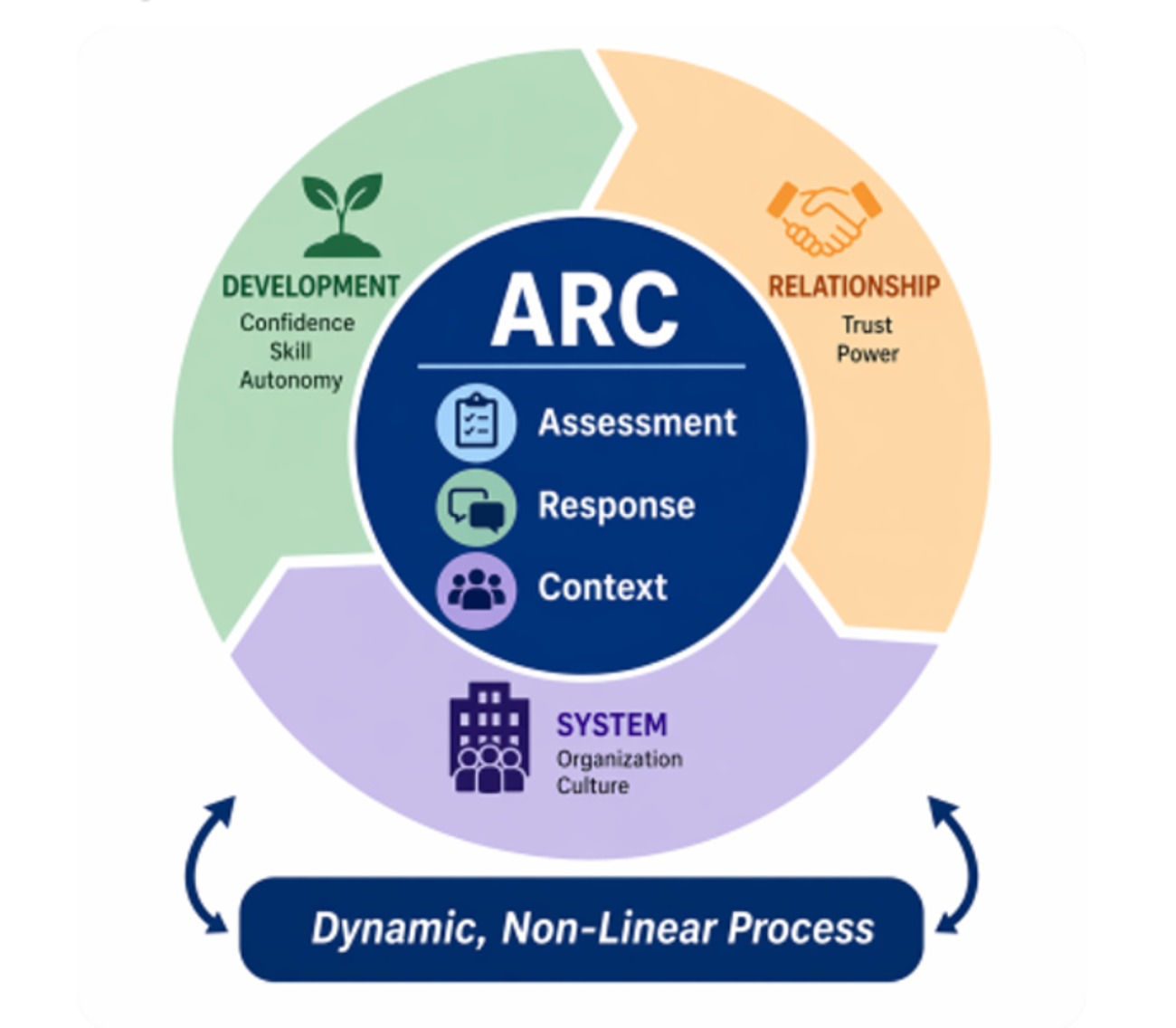
Participants will be introduced to the ARC Integrative Supervision Model (Assessment, Response, Context), a structured decision-making framework used to guide supervision in real time. This model is integrated with major supervision theories, including theory-based, non-theory-based, and research-informed approaches, allowing supervisors to adapt their approach based on supervisee needs and developmental level.
The training includes key components of supervision practice such as onboarding, documentation, evaluation, remediation, and ethical decision-making, with a focus on real-world application.
By the end of the training, participants will be equipped to implement a structured supervision process and apply supervision concepts with clarity, confidence, and intentionality.
Learning Objectives
Participants will learn to:
1. Apply ethical, legal, and professional standards to clinical supervision, including documentation, evaluation, remediation, gatekeeping responsibilities, and compliance with Texas regulations
2. Analyze the roles and responsibilities within the supervisory relationship and apply strategies to build and maintain effective supervision relationships
3. Compare major theoretical, non-theoretical, and research-informed models of clinical supervision
4. Select and apply supervision methods, techniques, and modalities (including individual, group, and technology-assisted supervision) based on supervisee needs and developmental level
5. Design and implement a structured supervision process, including onboarding, documentation, record-keeping, reporting requirements, and compliance with Texas supervision requirements
6. Develop supervision plans that support supervisee growth, skill development, and professional functioning
7. Differentiate between supervisee needs (e.g., skill, confidence, conceptualization) and apply appropriate supervisory responses
8. Apply strategies to address and manage common supervisory challenges, including relational, ethical, and performance-based concerns
9. Develop and utilize supervision documentation and onboarding processes, including interviewing, selecting supervisees, informed consent, contracts, remediation plans, and required Texas supervision documentation
10. Differentiate between supervision evaluation methods and apply appropriate approaches to assess supervisee performance and readiness for independent practice
11. Apply principles of culturally responsive supervision, including awareness of identity, power, and the supervisor’s own values and biases
12. Apply a structured supervision framework (ARC: Assessment, Response, Context) to guide real-time supervision decision-making
Topics Included
Core Topics
• Foundations of clinical supervision and the supervisory relationship
• Texas LPC and LMFT rules, ethical standards, and regulatory requirements
• Supervision models and frameworks
• Supervision process, structure, and required Texas documentation
• Supervision methods and modalities (individual, group, and technology-assisted)
• Supervisee development and differentiation of needs
• Evaluation, feedback, remediation, and gatekeeping
• Culturally responsive supervision
• Addressing supervisory challenges and performance concerns
• Application of supervision within the Texas regulatory system
Pre-Training Homework (Required)
This training includes structured pre-training work designed to ensure participants arrive prepared to apply supervision concepts in real time.
Participants complete approximately 28 hours of structured pre-training work designed to build foundational knowledge and prepare for active participation in training. This includes:
• Self-awareness and reflection assignments
• Supervision genogram and cultural genogram
• Development of supervision documents (informed consent and contract)
• Review and application of Texas rules and ethics
• Assigned readings with quizzes, Pace Setter: Leadership & Culture in Mental Health by Dr. Johnson (included) and The New Handbook of Counseling Supervision (additional cost) to apply supervision principles in practice
• Observation and analysis of supervision session


Why Come In Person?
• Receive in-person contact CE hours
• Enjoy staying in Fort Worth, Texas with hotels within walking distance
• Tour our 7500 square foot counseling practice and continuing education facility
• Build relationships with other participants
• Informal conversations during breaks and lunch with our trainer
Live/Virtual Training Information
• For virtual training, ensure a stable Wi-Fi connection and a working camera to be visible for the full session.
• The training is held via Zoom; download the Zoom app before the course.
• Participants will receive four emails prior to training:
1. Within 24–48 business hours of purchase: homework and instructions
2. One week before training: Zoom link, schedule, lunch details, and address
3. Beginning of training week: all materials and instructions
4. Morning of training: Zoom link and evaluation form
• Homework (28 of 40 hours) must be completed within 90 days of registration, ideally before the first day of live training.
• Breaks include two 15-minute breaks and one 30-minute lunch.
• Certificates are emailed within 5–7 business days after training, once homework and evaluations are complete.
• Trainings may be canceled due to low registration; participants will be notified promptly and offered alternatives.
• Trainings are hybrid: live on-site and streamed via Zoom simultaneously; virtual participants can fully participate in real time.
Additional Information
• LPC’s and LMFT’s have 90 days to complete the training once they purchase the training
• After 90 days, participants will no longer have access to the course to complete the training and would need to re-purchase the training
• For LPC’s the training can be used to apply for LPC Supervisor status for 2 years after completing the training
• Homework assignments must be completed and approved by Dr. Johnson and an evaluation completed before a certificate will be issued
Dr. Rhonda Johnson
LPC-S, LMFT-S, REGISTERED PLAY THERAPIST™ SUPERVISOR, APPROVED CLINICAL SUPERVISOR, TBRI PRACTITIONER, EMDR CONSULTANT, SOMATIC EXPERIENCING™ PRACTITIONER
She is the founder and owner of the Center for Counseling and Family Relationships (CCFAM), a large, thriving group practice that was established in 2007 and specializes in family systems and trauma-informed approaches. Dr. Johnson is also the founder and owner of CCFAM Training, established in 2011, offering supervision and ethics courses. She is also the owner of Play Therapy Training Resources, established in 2021. Through those companies, she provides continuing education, supervision, and consultations.
Dr. Johnson has been supervising for the state of Texas since 2007, both individually and in groups, as well as virtually and in-person. She has provided supervision for supervisees within her practice, for those outside of her practice, and for supervisees with multiple sites including community agencies, adoption agencies, hospitals, and churches.

Approved Continuing Education Provider
CCFAM Training has been approved by NBCC as an Approved Continuing Education Provider, ACEP No. 7105. Programs that do not qualify for NBCC credit are clearly identified. CCFAM Training is solely responsible for all aspects of the programs.
AI Policies
The use of artificial intelligence tools to complete assignments associated with this training is strictly prohibited.
Cancellation and Refund Policy
This training is non-refundable, unless cancelled by training provider. Event will be cancelled if fewer than 6 participants.