

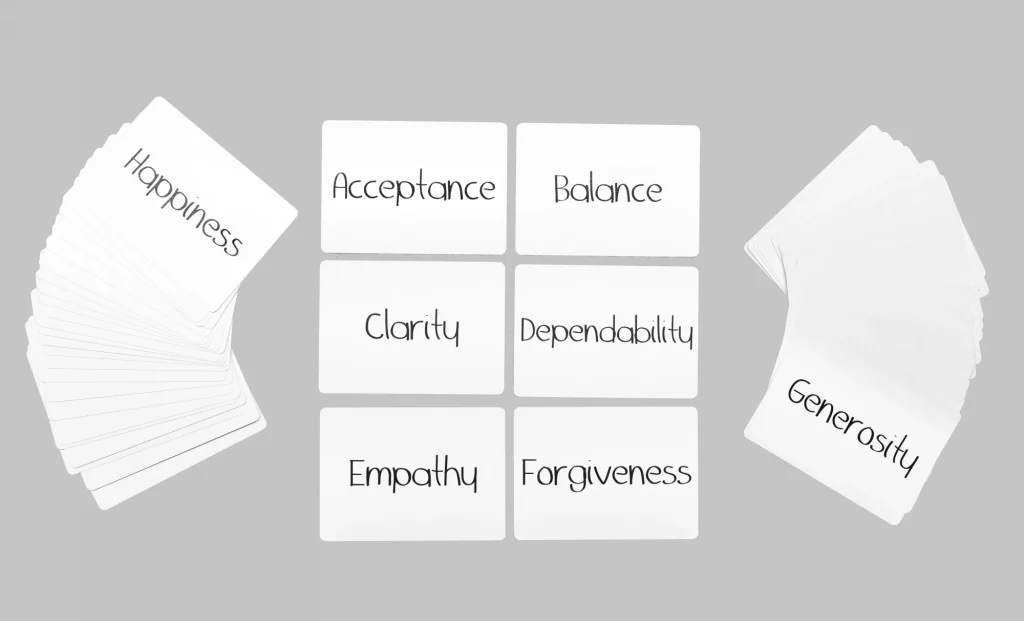
Value Sort Cards
Use With: Teens, Adults, Parents, Couples, Families
Setting: Individual or group sessions
Purpose: Explore personal and relational values that influence choices and priorities.
How They’re Used: Clients sort and rank values by importance, creating space for dialogue about alignment, conflicts, or overlooked priorities.
Benefits: Builds self-awareness, clarifies decision-making, and strengthens relationships through deeper understanding of what truly matters.
Group Use
Icebreaker Picks – Each member picks a card that resonates with them today and shares why.
Value Line-Up – Place a value continuum across the room (e.g., “least to most important”) and have members physically place their card. Discuss differences.
Storytelling Round – Everyone tells a short story from their life that connects to the value card they pick.
Celebration Circle – At group closure, each person selects a value card to affirm in someone else.
Journey Mapping – Each member picks three values and arranges them in sequence to represent their personal growth path.
Future Vision – Group collectively chooses the top 5 values they want to characterize their team or family moving forward.
Individual Use
Value Sorting – Have clients sort cards into three piles: Most Important, Somewhat Important, Not Important. Then reflect on why.
Top 5 Selection – Client chooses their five most important values and explains how they show up in life.
Conflict Clarification – Explore inner conflict by identifying two cards that feel in tension (e.g., independence vs. family)
Life Mapping – Pick cards representing past, present, and future values. Discuss how these shifted over time.
Weekly Focus Card – Client pulls one card each session to “practice” living out that value intentionally. Strength Mirror – Client picks a card they believe describes them. Counselor reflects additional examples. Challenge Work – Identify a value they want to live more fully. Create small, concrete action steps
Values vs. Shoulds – Differentiate between cards that feel authentic vs. socially pressured.

Common Thread Cards
Use With: Children, Teens, Adults, Parents, Couples, Families
Setting: Individual or group sessions
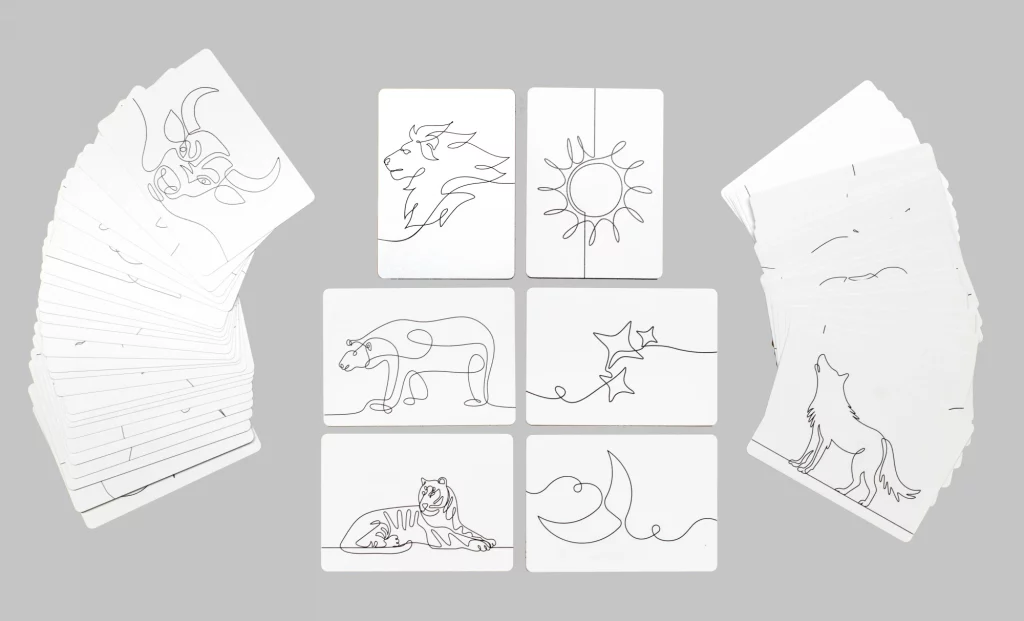
Purpose: Use imagery of animals and objects to spark personal insights and relational connections.
How They’re Used: Clients select images that resonate with them and share the meaning or story behind their choices.
Benefits: Encourages self-expression, builds rapport, and deepens relational bonds through symbolic and creative exploration.
Individual Use
Animal-as-Self Projection – Client chooses an animal that best represents how they feel today and an object that represents their current life situation.
Future Visioning – Pick an animal that represents who they want to become and pair it with an object symbolizing what tools/supports they’ll need to get there.
Strengths Identification – Animal cards can symbolize inner strengths; object cards represent external supports.
Coping Toolbox – Draw an animal and object randomly, then creatively link them to coping strategies (e.g., “like the owl, I can see in the dark; like the boots, I can take steps forward”).
Mood Tracking – Begin and end sessions with a “check-in animal” and “check-out object” to compare shifts in perspective.
Narrative Therapy – Have the client tell a story combining one animal and one object that reflects their journey.

Group Use
Icebreaker Introductions – Each participant chooses an animal/object that represents how they are showing up to the group today.
Animal Kingdom – Each participant chooses an animal and silently lines up to take their place in the animal kingdom.
Team Roles Exploration – Animals can symbolize roles members naturally take (leader, nurturer, protector); objects can reflect group dynamics.
Shared Storytelling – Each person contributes an animal or an object to co-create a group story, revealing themes of collaboration, chaos, or unity.
Conflict Resolution – Have group members each choose an animal to represent themselves in a conflict and an object to represent the tension. Then discuss perspectives.
Empathy-Building – Group members pair up, each drawing an animal or an object, then explain their choices as if they were the other person.
Speak Life Cards
Use With: Teens, Adults, Parents, Couples, Families
Setting: Individual or group sessions
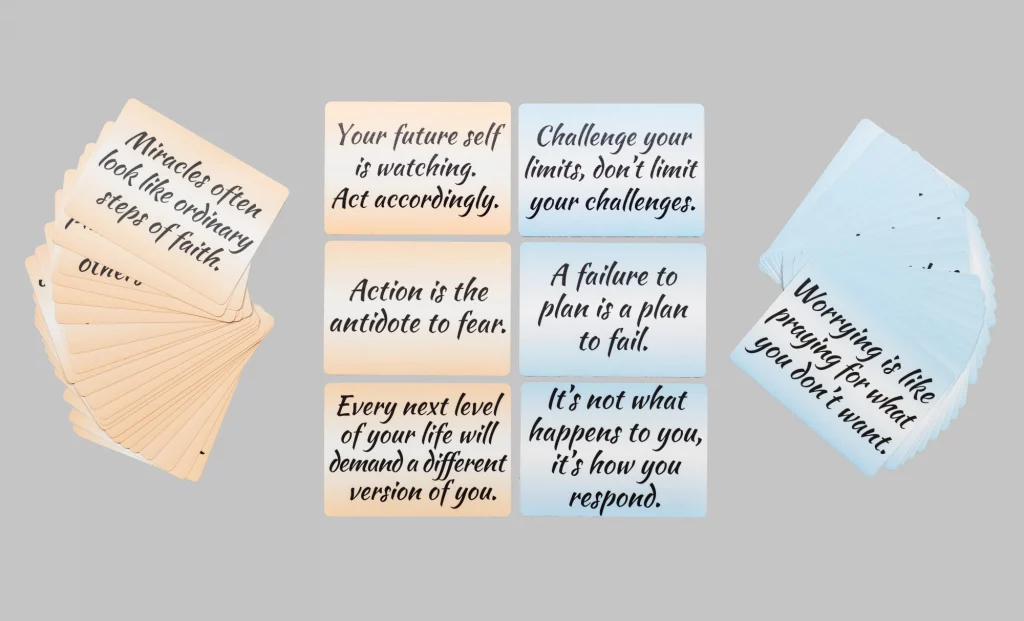
Purpose: Encourage reflection on messages that influence personal growth and resilience.
How They’re Used: Clients choose phrases that resonate with their experience and explore the deeper meaning in the context of their lives.
Benefits: Helps clients process life’s struggles through memorable and thought-provoking language, promotes new ways of thinking, and opens space for encouragement, hope, and honest dialogue.
Group Use
Opening Circle – Each group member draws a card and shares what it means to them.
Closing Reflection – Use cards at the end of group to summarize a takeaway or encouragement.
Pass the Card – One member picks a card for another, explaining why they think it fits.
Group Journaling – Everyone writes for 5 minutes about the same card, then shares insights.
Silent Reflection Walk – Participants each take a card and walk silently outdoors, reflecting, then regroup to discuss.
Seasons of Change – Place several cards in the middle and have members choose the one that resonates most with their current season.
Individual Use
Daily Draw – Client selects one card at the start of session and reflects on how it connects to their current life circumstances.
Journaling Prompt – Assign one card as a journaling reflection between sessions.
Reframe Practice – Use a card to help client reframe a negative thought into a more empowering perspective.
Life Story Connection – Have client choose a card and share a story from their life that illustrates its truth.
Challenge Setting – Pick a card and create a small, practical challenge related to its theme for the week.
Strengths Exploration – Have client choose a card that reflects a strength they already embody.
Perspective Shift – Ask client to pick a card they initially resist and explore why.
Decision-Making Aid – Use cards to help weigh choices: “Which card feels aligned with my next step?”

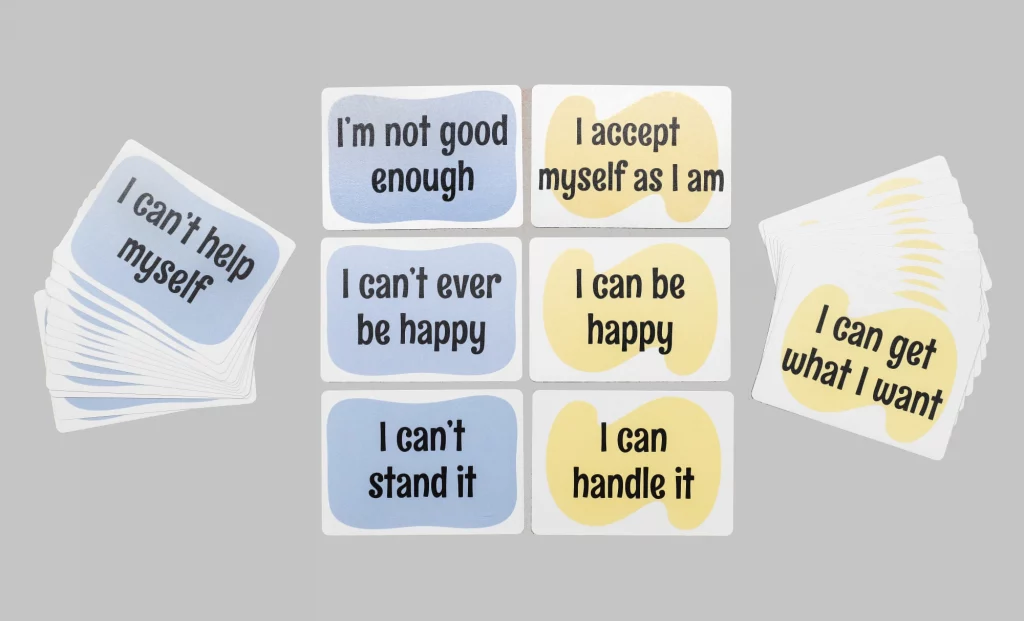
Cognition Cards
Use With: Children, Teens, Adults, Parents, Couples
Setting: Individual, family, or group sessions
Purpose: Recognize patterns of thought that shape emotions and behaviors.
How They’re Used: Clients identify unhelpful thoughts with opposite affirmation to replace them.
Benefits: Encourages resilience, hope, and positive self-image.
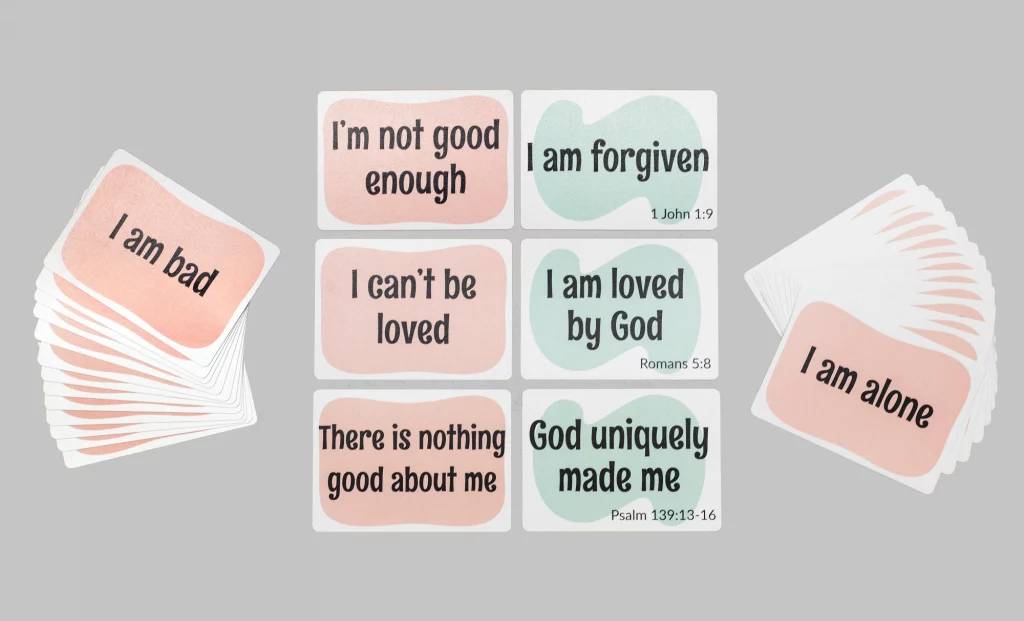
Faith-Based Cognition Cards
Use With: Children, Teens, Adults, Parents, Couples
Setting: Individual, family, or group sessions; faith-integrated settings
Purpose: Combine cognitive reframing with scriptural encouragement.
How They’re Used: Clients identify unhelpful thoughts with scripture-based affirmations to replace them.
Benefits: Supports spiritual and emotional growth, fosters hope, and integrates faith into the process of overcoming negative thought patterns.