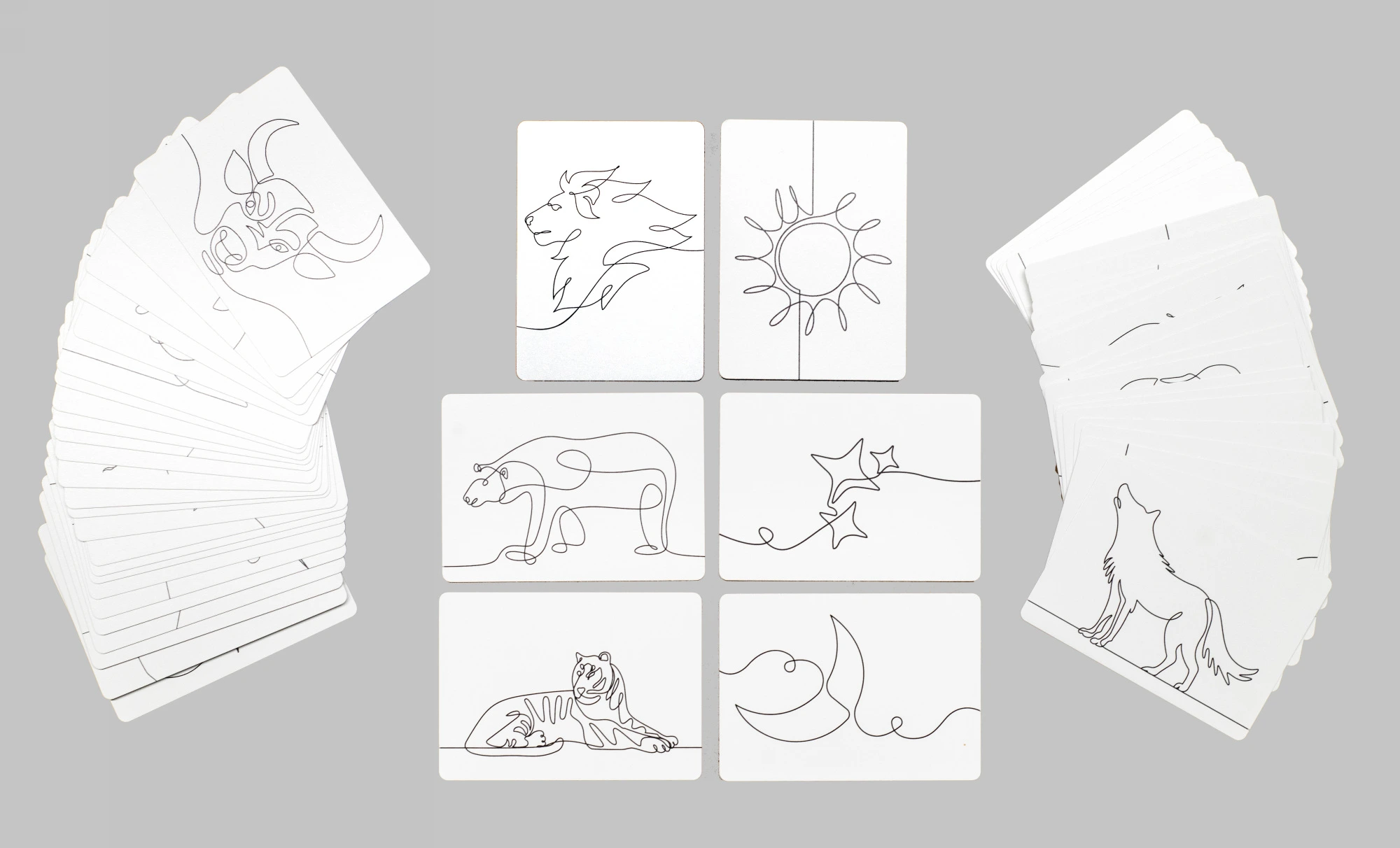
Common Thread Cards
$30.00
Use With: Children, Teens, Adults, Parents, Couples, Families
Setting: Individual or group sessions
Purpose: Use imagery of animals and objects to spark personal insights and relational connections.
How They’re Used: Clients select images that resonate with them and share the meaning or story behind their choices.
Benefits: Encourages self-expression, builds rapport, and deepens relational bonds through symbolic and creative exploration.
Individual Use
Animal-as-Self Projection – Client chooses an animal that best represents how they feel today and an object that represents their current life situation.
Future Visioning – Pick an animal that represents who they want to become and pair it with an object symbolizing what tools/supports they’ll need to get there.
Strengths Identification – Animal cards can symbolize inner strengths; object cards represent external supports.
Coping Toolbox – Draw an animal and object randomly, then creatively link them to coping strategies (e.g., “like the owl, I can see in the dark; like the boots, I can take steps forward”).
Mood Tracking – Begin and end sessions with a “check-in animal” and “check-out object” to compare shifts in perspective.
Narrative Therapy – Have the client tell a story combining one animal and one object that reflects their journey.
Group Use
Icebreaker Introductions – Each participant chooses an animal/object that represents how they are showing up to the group today.
Animal Kingdom – Each participant chooses an animal and silently lines up to take their place in the animal kingdom.
Team Roles Exploration – Animals can symbolize roles members naturally take (leader, nurturer, protector); objects can reflect group dynamics.
Shared Storytelling – Each person contributes an animal or an object to co-create a group story, revealing themes of collaboration, chaos, or unity.
Conflict Resolution – Have group members each choose an animal to represent themselves in a conflict and an object to represent the tension. Then discuss perspectives.
Empathy-Building – Group members pair up, each drawing an animal or an object, then explain their choices as if they were the other person.